
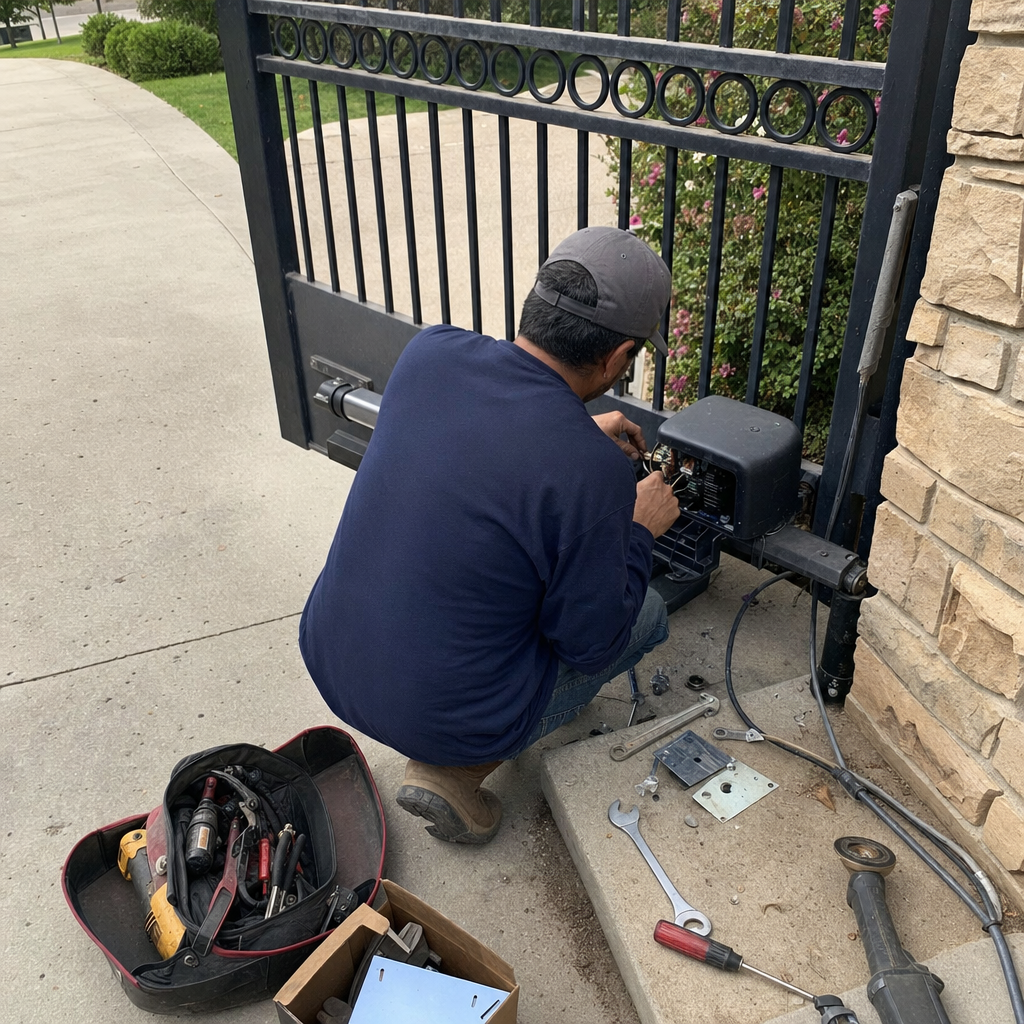
Last updated July 11, 2026
Seasonal Gate Repair Care for Wichita: Year-Round Homeowner’s Guide
Spring is when most Wichita homeowners call about gate problems, but spring is almost never when the damage happened. The failure was set in motion during February’s freeze-thaw cycle — spring is just when the gate finally gives up. After two decades of tracking service calls across Wichita, we’ve learned that gate systems don’t deteriorate evenly across twelve months. They accumulate damage in two narrow, predictable windows: the late-winter freeze-thaw weeks and the mid-August heat peak. A maintenance schedule that ignores this timing is just calendar theater. This guide restructures seasonal care around the actual stress peaks Wichita gates face, so you can prevent the failures that send your neighbors scrambling for emergency repairs in April and September.
Quick Answer
Gate maintenance in Wichita should focus on two critical windows: late February through early March, when freeze-thaw cycling damages posts and hardware, and mid-July through August, when heat triggers operator thermal cutoffs and board failures. A focused 30-minute inspection before each of these periods prevents roughly 70% of the seasonal failures we see in Wichita homes.
Table of Contents
- Why Wichita Gates Fail in Two Windows, Not Four Seasons
- Late Winter: The Hidden Damage Window (Late February–Early March)
- Spring: Assessment, Not Prevention
- Summer: Heat Peak and Operator Stress (Mid-July–August)
- Fall Prep: The 45-Minute Checklist Before First Freeze
- Winter: What to Monitor and What to Ignore
- What You Can Handle vs. What Requires a Technician
- Common Mistakes to Avoid
- When to Call a Professional
- Frequently Asked Questions
- The Bottom Line
Why Wichita Gates Fail in Two Windows, Not Four Seasons
Wichita sits at the intersection of three climate stressors that don’t play nice with gate systems: continental temperature swings, clay-heavy soils, and wind exposure across the flat Kansas plains. The result isn’t gradual wear — it’s concentrated damage during specific weeks.
The first window, late February through early March, delivers repeated freeze-thaw cycles. Daytime highs climb above freezing while overnight lows drop back below. Water seeps into concrete post bases, expands when it freezes, and contracts when it thaws. After a dozen cycles, a post that was plumb in January has shifted enough to bind the gate or strain the operator. We’ve replaced LiftMaster arms in Riverside homes where the operator itself was fine — the post had tilted 3 degrees, and the arm was fighting itself every cycle.
The second window, mid-July through mid-August, brings sustained heat above 95°F and humidity that pushes heat index values past 110°F. Gate operators — especially older models from DoorKing, Elite, or early Mighty Mule systems — run their circuit boards near thermal limits. Capacitors degrade faster. Thermal cutoff sensors trigger mid-day shutdowns. The gate works fine at 8 a.m., stalls at 2 p.m., and works again at 7 p.m. That’s not a ghost in the machine; it’s heat.
Between these windows, maintenance is useful but not urgent. During them, small problems become expensive ones in days, not weeks.
Late Winter: The Hidden Damage Window (Late February–Early March)
This is the most misunderstood period in Wichita gate care. Homeowners look at their gate in February, see it working, and assume everything’s fine. They’re checking the wrong thing. The damage is underground and incremental.
Clay soil mechanics in Wichita: The soil throughout Sedgwick County and especially in neighborhoods like College Hill, Delano, and the newer developments west of Maize Road contains high clay content. Clay expands when wet and contracts when dry. During freeze-thaw, this movement is amplified — the soil heaves upward, then settles unevenly. A gate post set in concrete doesn’t move with the soil; it tilts or cracks the concrete collar.
What early post displacement looks like:
- The gate scrapes the ground or catch post at one point in its swing, but not others
- The operator arm makes a clicking or grinding sound at the same position every cycle
- The gate “shudders” or pauses mid-travel, then continues
- Gaps between the gate and frame change size seasonally
What to inspect now:
- Check post plumb with a level. Hold a 4-foot level against the hinge post. If it’s off by more than 1/4 inch over that length, the post is moving. Mark the concrete base with a pencil and check again in two weeks.
- Examine the concrete collar. Look for fresh cracks radiating from the post, or a gap opening between the concrete and soil. Either indicates soil movement.
- Cycle the gate manually. Disconnect power and move it by hand. It should travel freely through the full arc. Any binding or heavy spots mean alignment is shifting.
- Inspect hardware for fresh stress marks. Check hinge bolts for shiny metal where paint has worn away — a sign the gate is shifting against the hardware.
If you find post movement, don’t adjust the gate to compensate. That masks the problem and transfers stress to the operator. The fix is resetting or replacing the post foundation — a job that requires excavation and proper drainage. We’ve fabricated custom post brackets in our Wichita shop for gates where standard hardware can’t accommodate the adjusted geometry.
Spring: Assessment, Not Prevention
By April, the damage is done. Spring maintenance in Wichita is about documenting what the winter window created and deciding what needs immediate attention versus what can wait.
Start with a full operational test. Run the gate through 10 complete cycles — open and close count as one. Listen for:
- Changes in motor pitch (straining vs. normal)
- Inconsistent travel speed
- Any pause or reversal without command
Check the operator’s force settings. Most modern operators — LiftMaster, FAAC, BFT — have adjustable force limits. If the gate is binding due to post shift, the operator works harder and may eventually trigger safety reversals or burn out the motor. Increasing force settings to compensate is dangerous; it overrides safety features. The correct response is fixing the mechanical problem, not masking it with electronics.
Spring is also when we see the aftermath of ice accumulation on slide gates. The channel beneath the gate collects water, which freezes and expands. When the gate tries to move, it rides up on ice ridges or jams entirely. By April, the ice is gone but the channel may be deformed or filled with compacted debris. Clean the full length and check for rail distortion.
In our experience across Wichita’s established neighborhoods — from Crown Heights to the homes near Wichita State — spring calls fall into two categories: “My gate stopped working” (sudden failure, usually operator damage from fighting misalignment) and “My gate has been acting weird for weeks” (gradual failure, usually mechanical wear that went unaddressed). The second category is cheaper to fix if caught now.
Summer: Heat Peak and Operator Stress (Mid-July–August)
Wichita’s summer heat doesn’t just make gate work uncomfortable — it fundamentally changes how operators behave. The critical period runs from roughly July 15 through August 20, when sustained highs above 95°F coincide with high humidity that reduces cooling efficiency.
Thermal cutoff behavior: Modern operators have thermal protection circuits that shut down the motor when internal temperature exceeds safe limits. In a properly shaded, ventilated installation, this rarely triggers. In Wichita’s reality — operators mounted on metal posts in full sun, or inside masonry pillars with no airflow — cutoffs become frequent. The gate stops mid-cycle, waits 15-30 minutes to cool, then resumes. To a homeowner, this looks like intermittent failure. To us, it’s a predictable thermal event.
Board-level failures: Prolonged heat exposure degrades electrolytic capacitors on control boards. A DoorKing or Elite board that functioned perfectly in June may fail completely in August. The failure pattern is distinctive: the gate works normally in morning and evening, acts erratically or not at all during peak heat, then recovers overnight. Once this pattern starts, board replacement is usually imminent.
What to do before the peak:
- Verify shade and ventilation. The operator should never be in direct afternoon sun. If it is, add a ventilated cover or relocate the unit. We’ve fabricated custom aluminum shades for Wichita installations where standard covers don’t fit.
- Test thermal performance now. Run the gate continuously for 5 minutes on a hot afternoon. If it cuts out, you have a problem that will worsen.
- Check battery backup systems. Heat accelerates battery degradation. A battery that tested fine in spring may fail under summer load. Most Mighty Mule and Ghost Controls residential systems use sealed lead-acid batteries with 3-5 year life spans; heat pushes them to the shorter end.
- Inspect wiring insulation. UV and heat harden insulation over time. Look for cracking, especially on low-voltage sensor cables exposed to sun.
The summer window is when our Gate Motor & Opener in Kansas City service sees the highest volume of operator replacements — not because the units were poorly made, but because years of thermal stress accumulated to failure point. Preventive replacement of a failing board in July beats emergency replacement in August when parts availability shrinks.
Fall Prep: The 45-Minute Checklist Before First Freeze
Fall maintenance in Wichita isn’t about dramatic interventions. It’s about eliminating the small problems that freeze-thaw will exploit. A focused 45-minute inspection in late October or early November prevents the majority of winter-related service calls we receive.
Drainage around posts: This is the single highest-impact task. Water that collects and freezes is what heaves posts and cracks concrete. Ensure soil slopes away from post bases. If it doesn’t, add soil or create a shallow trench to direct runoff. In areas with heavy clay, consider adding gravel around the concrete collar to improve drainage — but don’t create a basin that collects water.
Hardware torque check: Thermal cycling loosens fasteners. Check and tighten:
- Hinge bolts and nuts (don’t overtighten — binding is worse than slight play)
- Operator mounting brackets
- Track or guide hardware on slide gates
- Latch and catch plate alignment
Lubrication with temperature in mind: Standard lubricants thicken in cold. For Wichita’s winter lows, use a lithium-based grease rated to 0°F or below on hinges, rollers, and latch mechanisms. Avoid WD-40 as a primary lubricant — it displaces moisture but doesn’t provide lasting protection.
Photo-eye cleaning and alignment: Fallen leaves, spider webs, and early frost can obscure or misalign safety sensors. Clean lenses with a soft cloth and verify alignment using the operator’s indicator lights. A misaligned photo-eye won’t stop the gate immediately — it may work intermittently, then fail completely when frost or low sun angle creates glare.
Operator cover and seal inspection: Verify that the operator enclosure seals properly. Mice seeking winter shelter will enter through gaps and nest in electronics — we’ve found this in operators from Bel Aire to Haysville. A tight cover and steel wool in weep holes prevents this.
Complete this checklist before the first hard freeze, which in Wichita typically arrives by mid-November. The 45 minutes spent now saves the emergency call in February when your gate won’t open and temperatures are in single digits.
Winter: What to Monitor and What to Ignore
Winter in Wichita is not a maintenance-intensive season for gates — it’s a monitoring season. The critical work was done in fall; now you watch for signs that something was missed.
Monitor:
- Post position after each thaw. If you marked post bases in fall, check if marks have shifted relative to the concrete. Even 1/8 inch of new movement is significant.
- Unusual sounds during operation. Cold metal and stiff grease amplify noises. A new grinding or squealing indicates something changed — don’t wait for spring to investigate.
- Ice in the slide gate channel. Remove it promptly; don’t force the gate through. The operator will try to comply and may strip gears or overheat.
Ignore (or at least don’t panic about):
- Slower operation in extreme cold. Motors and grease are less efficient below 20°F. A 10-15% speed reduction is normal and not a failure.
- Brief hesitation on first cycle of the day. Cold components have higher initial friction. If operation normalizes by the second cycle, this is typical.
The one winter task worth doing: after significant ice or snow events, clear the gate’s full travel path and cycle it manually to ensure nothing is binding. This takes 5 minutes and prevents the “my gate is stuck” call that comes after every Wichita ice storm.
What You Can Handle vs. What Requires a Technician
We’re direct about this because misjudging the line costs homeowners money and, in some cases, creates safety hazards. Here’s where we draw it based on 20 years of seeing what goes wrong.
Homeowner-appropriate tasks:
- Visual inspection of posts, hardware, and operator enclosure
- Cleaning photo-eye lenses and checking for physical obstructions
- Basic lubrication of hinges and latches with correct products
- Manual cycling to check for binding (with power disconnected)
- Drainage improvement around post bases
- Battery voltage check with a multimeter (if you’re comfortable using one)
Technician-required work:
- Any adjustment to force settings or safety sensitivity — these affect entrapment risk and are regulated
- Post resetting or foundation repair
- Operator board diagnosis and replacement
- Welding or fabrication of gate components
- Electrical troubleshooting beyond battery testing
- Spring or counterbalance work on heavy gates — these store significant energy and can cause serious injury
The safety caveat on spring and counterbalance systems: if your gate uses torsion or extension springs to assist operation, do not attempt adjustment or repair. These components are under high tension and can cause severe injury or death if handled improperly. This is not a suggestion — it’s a hard boundary. We’ve seen the aftermath of DIY spring work, and it’s not worth the risk.
When a part isn’t available through normal channels, our in-house welding and fabrication capability keeps your gate from becoming a replacement project. Douglas Ross takes the call and does the work — the owner is your technician — so the assessment of whether to repair or replace comes from 20 years of gate-only experience, not a commission-driven sales script.
Common Mistakes to Avoid
- Adjusting the gate to compensate for post movement. This transfers stress to the operator and turns a $300 post repair into a $1,200 operator replacement. We’ve seen this exact progression in dozens of Wichita homes.
- Using the wrong lubricant for the season. Summer-weight oil becomes glue in January. Lithium grease rated for your lowest expected temperature is the only correct choice for Wichita’s range.
- Ignoring the morning-only or evening-only failure pattern. Intermittent operation that correlates with temperature is diagnostic gold. Calling when it happens, not when it’s convenient, helps us confirm the pattern and fix it right the first time.
- Power-washing the operator enclosure. Pressure forcing water into sealed electronics causes corrosion that appears months later, usually attributed to “random” failure. Wipe down with a damp cloth only.
- Waiting for “spring maintenance” to address February problems. By April, post shift has stressed the operator, worn the hinges, and possibly damaged the gate frame. The cheapest fix is in the window when the problem starts.
- Assuming all operators are interchangeable. A LiftMaster arm on a gate designed for FAAC geometry will work poorly and fail early. Brand-specific knowledge matters — we service 9 major brands, so your system is never out of scope.
- Neglecting the slide gate channel. Wichita’s windblown debris and summer storms fill these channels with material that becomes concrete-hard over time. Quarterly clearing prevents the jam that burns out your operator.
When to Call a Professional
Call when you observe post movement, intermittent temperature-related failure, any new grinding or binding sound, or if your gate reverses unexpectedly — this last item is a safety system malfunction that should not wait. Call if you’re unsure whether a task is homeowner-appropriate; we’d rather answer a question than repair damage from a well-intentioned DIY attempt.
Halcyon Automatic Gate Repair Kansas offers free estimates in Wichita — call (833) 754-6310. Douglas Ross handles the assessment personally, and if your gate needs something we can’t fabricate or repair in-house, we’ll tell you directly. Two decades of gate-only experience means we’ve seen your exact problem before, and 413 customers with a 4.9-star average don’t happen by accident — they happen one honest job at a time.
Frequently Asked Questions
Professional seasonal inspection and adjustment typically runs $150–$300 for a standard residential automatic gate in Wichita, depending on system complexity and whether issues are found. This covers full mechanical and electrical assessment, safety system testing, and minor adjustments. Call (833) 754-6310 for an exact quote — estimates are free.
Homeowners can handle visual inspections, cleaning, lubrication, and drainage improvements safely. However, force setting adjustments, electrical diagnosis, post foundation work, and any spring or counterbalance service require a trained technician due to safety regulations and injury risk. If you’re uncertain where your task falls, call us before proceeding.
This pattern almost always indicates heat-related operator stress. The control board or motor reaches thermal cutoff threshold during peak afternoon temperatures, then recovers as temperatures drop. In Wichita’s climate, this typically appears in late July and August. The fix may be as simple as adding shade and ventilation, or it may signal board degradation requiring replacement.
Clay expands when wet and contracts when dry, with freeze-thaw cycles amplifying the movement by 200–400% compared to unfrozen conditions. A gate post set in concrete can’t move with the soil, so the soil either cracks the concrete collar or tilts the post. Early signs include gate binding at one point in its swing or fresh cracks radiating from the concrete base.
For gates less than 15 years old with isolated post shift or operator failure, repair is almost always more economical — typically 30–50% of replacement cost. Our in-house welding and parts fabrication extends this option to gates with custom or discontinued hardware. We assess each situation honestly; replacement is recommended only when the gate frame itself is compromised or repair costs approach replacement.
Spring and late summer are our highest-volume periods. We prioritize safety-related calls — gates stuck open, entrapment risk, or safety system failures — typically same-day or next-day. Non-urgent assessments are usually scheduled within 48–72 hours. Calling at first sign of trouble, before complete failure, gives you the most scheduling flexibility.
The Bottom Line
Wichita gate maintenance isn’t about checking boxes every three months — it’s about concentrating effort where climate stress concentrates damage. The late-winter freeze-thaw window and mid-summer heat peak are when gates actually fail; everything else is preparation or recovery. Focus your attention there, know which tasks are yours and which require a technician, and address problems in the window when they start, not when they finally force the issue. Your gate will last longer, cost less, and fail less often at inconvenient moments.
Ready to schedule a seasonal inspection or need help with a gate that’s showing warning signs? Halcyon Automatic Gate Repair Kansas serves Wichita homeowners with the focused expertise that only two decades of gate-only work provides. Whether you need Gate Repair in Kansas City, Gate Installation in Kansas City, or specialized motor and opener service, Douglas Ross handles every assessment personally. Call (833) 754-6310 for a free estimate.
Written by Douglas Ross, Owner & Lead Technician at Halcyon Automatic Gate Repair Kansas, serving Wichita since 2006.